


Before
You Scroll
Digicode builds custom agentic AI procurement automation software for enterprise procurement teams. Unlike licensed source-to-pay suites, our agent systems execute procurement workflows autonomously – from intake and sourcing through RFx, evaluation, contract drafting, and compliance monitoring – inside your own infrastructure, integrated with the ERP you already run.
If you’re a CPO, CFO, procurement operations lead, or category manager evaluating whether agentic AI in procurement has crossed from interesting to operationally deployable – the answer in 2026 is more than yes. So what that looks like in practice, what it costs, and how to de-risk the investment?
Custom AI Software Delivered for






9 Agents
Working as
One Team
Compliance
Sourcing
Evaluation
Intake
RFx
Risk
Contract
Negotiation
Spend
What is Agentic AI
and Why it Matters
for Procurement
Agentic AI meaning in one sentence: AI that executes, not just responds.
Produces output when you ask
A contract summary. A draft RFx. A supplier report. The work waits on a prompt. Humans coordinate every handoff between stages, between systems, between people.
Runs the workflow without being asked
Monitors your intake queue. Drafts the RFx. Routes for approval. Scores bids. Flags compliance deviations. Escalates exceptions with the evidence already attached. You didn’t prompt any of that.
If you evaluated AI procurement in 2024
Three Things Changed that Make This Evaluation Different
Most procurement leaders looked at AI tools 12–18 months ago and concluded “not ready yet.” That conclusion was correct in 2024 and is increasingly wrong in 2026.
THEN → NOW
Chatbots became agents
In 2024, “AI procurement” usually meant a chatbot wrapped around an existing suite.
Unlike generative AI vs agentic AI, where generative tools assist on request, agentic AI systems execute end-to-end without prompting – that’s the shift that changes P2C throughput. In 2026, agentic AI systems execute multi-step workflows across systems autonomously, drafting RFx, scoring bids, generating contracts. The capability is fundamentally different.
THEN → NOW
Private deployment hit production maturity
Azure, AWS, and on-prem deployment options now meet enterprise governance standards. Procurement and contract data never leaves your tenant – the GDPR and compliance objections that blocked 2024 pilots are now solved problems.
THEN → NOW
Implementation shrank from 12 months to 6 weeks
Day-1 value via SharePoint and file shares is now the norm. Connections to SAP S/4HANA, Oracle Fusion, and Microsoft Dynamics deploy incrementally in 4–8 weeks rather than as a year-long project. Implementation risk dropped by an order of magnitude.
Why Suite Licences Haven’t Moved the Needle
Procure-to-Contract cycle time
Contract compliance rate
RFP drafting time
Annual spend savings captured
Your procurement team is doing extraordinary work – inside an operating model designed two decades ago.
Every RFP takes 8 to 16 hours to draft. Every contract cycle runs 60 to 90 days. Supplier risk data sits in spreadsheets. 15 to 20% of spend leaks through maverick purchasing. Roughly 73% of the team’s week disappears into administration.
None of this is a people problem. It’s a way-of-working problem – and it won’t be solved by licensing another source-to-pay suite on top of the one you already have.
For twenty years, procurement software promised to compress these cycles. The pattern is well-documented: 12-month implementations, adoption below forecast, cycle-time numbers drifting back up within two quarters of go-live. Chatbots and suite copilots add a conversational layer but don’t change how the work actually gets done.
Agentic AI changes that.
An autonomous procurement agent monitors intake queues, drafts RFx from structured requirements, runs supplier due diligence against continuously-updated risk signals, scores bids against your evaluation criteria, populates contracts from negotiated terms, and surfaces the decisions that require human judgement with the evidence already attached.
This is agentic AI process automation applied to procurement’s most persistent operational constraints – not a better interface on top of the same slow workflow.
"What's the real difference between a procurement chatbot, a procurement copilot, and an autonomous procurement agent – and which one actually moves P2C metrics? That's the question this field guide was written to answer."
Ranges reflect documented outcomes across enterprise agent deployments · Full methodology in the field guide
Want the chatbot vs. agent comparison alone? We’ll email you just the capability matrix – no full guide, no sales sequence
Email me the matrixWhat you get
A Working Agent
Team, not Another
Platform Licence
Nine specialised AI agents, working together across your full Procure-to-Contract cycle. Each owns a defined stage. Each integrates with the systems you already run. This is agentic AI for process automation applied directly to procurement operations, removing coordination bottlenecks across the full P2C workflow.
Let’s look at agentic AI examples from each stage of the P2C cycle – not concepts, but what each agent actually executes in production.
Compressed cycle time
- Intake, sourcing, RFx, scoring, and drafting run in parallel
- Approval routing based on value and risk, not inbox luck
- Typical compression: 60–90 days → under 30
RFx in minutes, not hours
- Auto-population from template library and category playbook
- Evaluation criteria suggested from historical award data
- 70–80% reduction in drafting time
Continuous supplier risk
- Financial, ESG, geopolitical, and certificate monitoring
- Auto-escalation with evidence already attached
- >80% of material risks surfaced before business impact
Contracts compliant by design
- Deviations flagged at generation, not after the fact
- Obligations tracked continuously across the portfolio
- Compliance: ~85% manual → 98%+ agent-driven
Tail spend, handled
- Low-value requests auto-routed to preferred suppliers
- Guided buying removes approval friction at the source
- 15–20% spend leakage reclaimed into managed channels
Day-1 value on your stack
- SAP, Oracle, Microsoft – agnostic, not locked
- Private LLM: GDPR-compliant, no third-party training
- Full ERP integration: 4–8 weeks, not 12 months
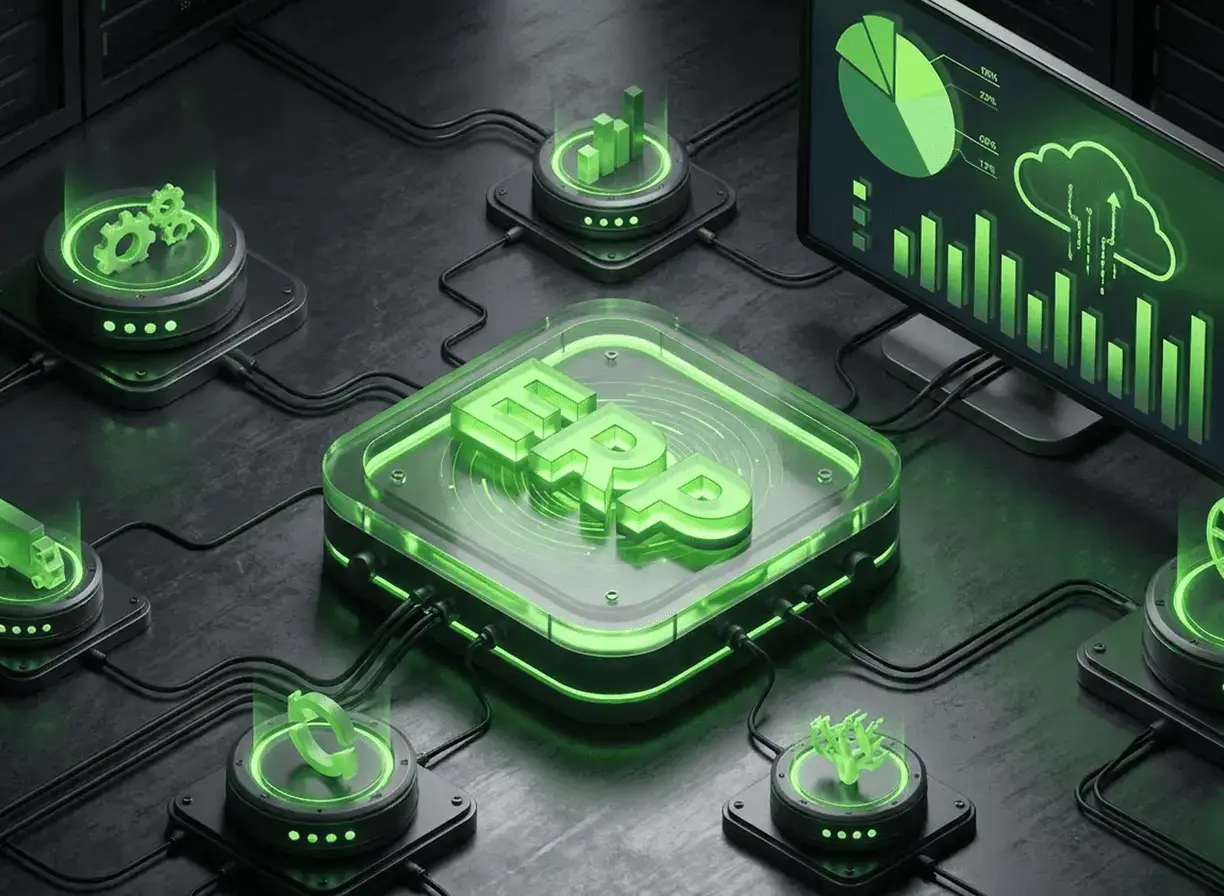
Agentic AI in Procurement:
Cases, Examples, and What Autonomous
Execution Actually Looks Like
The agentic AI use cases in production today:
RFX & SOURCING
Intake → finished RFx
Intake arrives. The agent classifies it, drafts the RFx from templates and historical data, routes for approval, and queues bids for scoring. No manual orchestration required.
SUPPLIER RISK
Continuous, not quarterly
The risk agent monitors financial signals, sanctions, ESG developments, and certificate expirations continuously, escalating automatically when something material appears.
CONTRACT COMPLIANCE
Compliance by design
Post-signature, the contract agent tracks obligations live, flags deviations at generation (not at audit), and surfaces renewals before they become urgent.
TAIL SPEND & INTAKE
Maverick spend, routed
Low-value requests are classified, matched to preferred suppliers, and approved automatically – eliminating the friction that drives maverick purchasing in the first place.
HOW WE ENGAGE
From First Conversation to Agents in Production
Four stages. Defined deliverable at each gate. No long-term commitment until the metrics move.
01
Strategy session
45-minute working session. We map your current P2C cycle, identify the highest-leverage agent deployment, and leave you with a one-page transformation blueprint. Free. No commitment.
02
Transformation Blueprint
Tailored to your ERP stack, category map, and top three P2C pain points. Agreed KPIs – cycle time, compliance uplift, hours saved, savings captured – signed in writing before any pilot begins.
03
30-90 Day PoV Pilot
One specific workflow: RFx generation, supplier onboarding, or contract compliance. Measurable business outcome at the end. You evaluate before any scale commitment.
04
Scale or Stop
Pilot hits its KPIs: we scale across your full P2C cycle. Pilot misses: we stop. No long-term contract, no platform lock-in. You keep the blueprint either way.
ABOUT DIGICODE
Custom AI Software. Not Another Licence.
AI-Driven · Outcome-Focused · Human-Centered
Digicode is a custom AI software development company. For more than two decades we’ve built enterprise-grade custom software for FinTech, HealthTech, retail, and manufacturing clients – including Microsoft, Bosch, Cisco, SAP, and PwC.
We don’t resell licensed platforms. We build the agentic AI solution that actually moves your numbers, operating on your data, integrated with the ERP, CLM, and collaboration tools you already run, governed by your compliance rules.
Our procurement practice exists because procurement is where agentic AI automation has the highest near-term business impact – and the largest gap between what legacy suites promise and what they deliver.
97%
Client retention rate
250+
Projects delivered
400+
Digicoders on staff
25+
years in custom software

Alex Karichensky
May 21, 2026

Alex Karichensky
May 13, 2026


Denis Rasulev
February 16, 2026
FAQ
-
What is the difference between a procurement chatbot, a procurement copilot, and an autonomous procurement agent?
A chatbot is reactive and session-based – it answers questions when asked but doesn’t take action across systems. A copilot suggests next steps inside a specific tool (typically Microsoft 365 or a suite’s native UI) but still requires a human to execute each step. An autonomous agent is proactive, stateful, and cross-system – it monitors queues, executes tasks, escalates exceptions, and completes workflow stages without being prompted for each one.
Only agents meaningfully reduce Procure-to-Contract cycle time. The full breakdown with a capability matrix across all three is in the field guide.
-
What is procure-to-contract (P2C) automation and how does it work?
Procure-to-Contract automation is the use of AI and workflow orchestration to compress the cycle from need identification through executed contract, covering intake, sourcing strategy, RFx creation, supplier qualification, bid evaluation, negotiation, contract drafting, review, and execution.
A properly designed agent system executes each stage. A typical enterprise cycle compresses from 60–90 days to under 30.
-
How should we build an internal business case for AI procurement agents?
The business case sits on four measurable levers: savings capture (typically 5–10% of addressable spend), cycle-time reduction (50% typical on P2C), team productivity (~3× throughput at same headcount), and compliance uplift (~85% manual → 98%+ agent-driven).
Build your model bottom-up: take your current addressable spend, current cycle time, current team cost, and current compliance rate as the pre-deployment baseline. Apply the ranges above, adjusted for category mix and current ERP maturity. For a €200M spend environment, the annualised value typically sits in the €10–20M range. Payback normally lands inside the first operating year.
-
For Transformation Leads: What does the integration architecture look like and what’s the implementation sequence for SAP, Oracle, or Microsoft?
Day-1 value comes through SharePoint, file shares, and email integration – agents start drafting RFx documents and processing supplier intake before any ERP connection is built. This decouples value delivery from ERP integration timelines.
Full ERP integration is incremental: typical first-wave connections (SAP S/4HANA, Oracle Fusion, Microsoft Dynamics 365) deploy in 4–8 weeks using read-first patterns. Write-back integrations follow once the agent layer has been validated against your data.
We use private LLM deployments (Azure OpenAI, AWS Bedrock, or on-prem) so procurement data never leaves your governance boundary. The integration architecture, deployment patterns, and data residency model are documented in detail in section 04 of the field guide.
-
Is our data safe? What about GDPR, CSRD, and sector compliance?
Yes. All agent deployments run on private LLM infrastructure, either hosted in your Azure/AWS tenant or on-premises. Your procurement data, supplier data, and contract text never enter a shared model and are never used for third-party training. GDPR-compliant by design.
For EU operators, the same setup supports CSRD Scope 3 data collection and CSDDD supplier due-diligence obligations as native agent workflows, not bolt-ons.
-
For Procurement Consultants: If we’re advising a client on AI procurement vendor selection, what should the evaluation criteria actually contain?
Modern AI procurement RFPs need a different evaluation lens than 2022-era source-to-pay procurements. The criteria should test for execution capability, not feature counts: can the system autonomously execute defined tasks end-to-end, or only suggest next steps to a human operator?
Beyond execution, the evaluation should cover: data residency and private LLM architecture, integration patterns for the client’s specific ERP, KPI accountability mechanisms in the commercial model, and exit options if the technology underperforms.
Section 07 of the field guide includes our RFP evaluation checklist extract – the specific criteria, scoring weights, and disqualifying questions we recommend including in any 2026 AI procurement RFP. It’s designed to be lifted directly into your client deliverable.
-
How is supplier risk actually handled in an agentic AI setup?
A dedicated risk agent runs continuous monitoring across financial signals, ESG data, geopolitical risk indicators, certificate expiry, and regulatory sanctions lists – not a quarterly spreadsheet refresh. When a risk threshold is crossed, the agent auto-escalates to the category owner with the evidence and recommended action already attached.
This typically moves risk detection from reactive (after something has happened) to proactive (>80% of material risks surfaced before business impact).
-
What happens if the 30–90 day Proof of Value pilot doesn’t hit its KPIs?
We stop. No scale commitment, no long-term contract, no platform you’re locked into. You retain the blueprint, the pilot’s operational output, and the documentation.
The KPIs are agreed in writing before the pilot starts, so there’s no ambiguity at the end of the engagement. We part company as professionals.
-
Who needs to be involved from our side to get started?
The strategy session requires one person: the CPO, the Head of Procurement Transformation, or a senior procurement consultant leading an AI evaluation.
The PoV pilot typically engages 3–5 people from procurement operations, plus an IT liaison for data access. No upfront IT project. No cross-functional steering committee. We scope for speed.
Your Procurement Workflow Has Bottlenecks AI Can Fix Today
Let’s look at your current workflow. Book a free call, and we’ll show you exactly which parts of your process can be automated with AI right now.